

In the realm of electrical engineering and industrial applications, Variable Frequency Drives (VFDs) play a pivotal role in controlling the speed and torque of electric motors. As a prominent supplier of 220v To 380v VFD, I am often asked about the significance of a high power factor in these devices. This blog post aims to delve into the importance of a high power factor in 220v to 380v VFDs, exploring its technical implications, economic benefits, and environmental advantages.
Understanding Power Factor
Before we dive into the significance of a high power factor, let's first understand what power factor is. Power factor is a measure of how effectively electrical power is being used in an AC circuit. It is defined as the ratio of real power (P), which is the power that actually does useful work, to apparent power (S), which is the product of the voltage and current in the circuit. Mathematically, power factor (PF) is expressed as:
[PF=\frac{P}{S}]
A power factor of 1 (or 100%) indicates that all the electrical power supplied to the circuit is being used effectively to do useful work, while a power factor less than 1 means that some of the power is being wasted in the form of reactive power. Reactive power is the power that oscillates between the source and the load without doing any useful work, and it is caused by inductive or capacitive elements in the circuit.
Technical Implications of a High Power Factor in 220v To 380v VFDs
In a 220v to 380v VFD, a high power factor has several important technical implications. Firstly, it reduces the amount of reactive power flowing through the electrical system, which in turn reduces the current flowing through the wires and cables. This results in lower resistive losses (I²R losses) in the electrical distribution system, as the power loss in a conductor is proportional to the square of the current flowing through it. By reducing these losses, a high power factor improves the overall efficiency of the electrical system and reduces the amount of energy wasted as heat.
Secondly, a high power factor helps to improve the voltage regulation in the electrical system. Reactive power can cause voltage drops in the electrical distribution system, especially in long transmission lines or in systems with high inductive loads. By reducing the reactive power, a high power factor helps to maintain a more stable voltage level, which is essential for the proper operation of electrical equipment. This is particularly important in industrial applications where voltage fluctuations can cause damage to sensitive equipment or affect the quality of the products being produced.
Thirdly, a high power factor reduces the stress on the electrical components in the VFD and the electrical distribution system. Reactive power can cause additional heating and stress on transformers, switchgear, and other electrical equipment, which can lead to premature failure and increased maintenance costs. By reducing the reactive power, a high power factor helps to extend the lifespan of these components and reduce the overall maintenance requirements of the electrical system.
Economic Benefits of a High Power Factor in 220v To 380v VFDs
From an economic perspective, a high power factor in a 220v to 380v VFD can result in significant cost savings. As mentioned earlier, a high power factor reduces the amount of reactive power flowing through the electrical system, which in turn reduces the current flowing through the wires and cables. This reduces the resistive losses in the electrical distribution system, which can result in lower energy bills for the end-user. In addition, many utility companies charge their customers based on their power factor, and customers with a low power factor may be subject to additional fees or penalties. By improving the power factor of their electrical system, customers can avoid these additional charges and save money on their electricity bills.
Furthermore, a high power factor can also result in cost savings in terms of equipment investment. By reducing the reactive power, a high power factor allows for a more efficient use of the electrical distribution system, which means that smaller transformers, switchgear, and other electrical equipment can be used. This can result in lower capital costs for the installation of the electrical system, as well as lower operating costs due to reduced energy consumption.
Environmental Advantages of a High Power Factor in 220v To 380v VFDs
In addition to the technical and economic benefits, a high power factor in a 220v to 380v VFD also has several environmental advantages. As mentioned earlier, a high power factor reduces the amount of energy wasted as heat in the electrical distribution system, which means that less energy needs to be generated to meet the same load demand. This results in a reduction in the overall energy consumption of the electrical system, which in turn reduces the carbon emissions associated with the generation of electricity.
Furthermore, by reducing the energy consumption and improving the efficiency of the electrical system, a high power factor helps to conserve natural resources and reduce the environmental impact of the electrical power generation. This is particularly important in today's world, where there is a growing concern about climate change and the need to reduce our carbon footprint.
Different Types of 220v To 380v VFDs and Their Power Factor
There are different types of 220v To 380v VFDs available in the market, such as Single Phase Output VFD and Single Phase Input 3 Phase Output VFD. Each type has its own characteristics regarding power factor.
Single Phase Output VFDs are often used in applications where a single-phase power supply is available and a variable frequency output is required. These VFDs may have different power factor correction techniques to achieve a high power factor. Some advanced Single Phase Output VFDs can achieve a power factor close to 1, which offers all the benefits mentioned above.
Single Phase Input 3 Phase Output VFDs, on the other hand, are designed to convert a single-phase input power to a three-phase output power. These VFDs are widely used in industrial applications where three-phase motors need to be powered from a single-phase power source. Similar to Single Phase Output VFDs, high-quality Single Phase Input 3 Phase Output VFDs are equipped with power factor correction circuits to improve the power factor and enhance the overall performance of the electrical system.
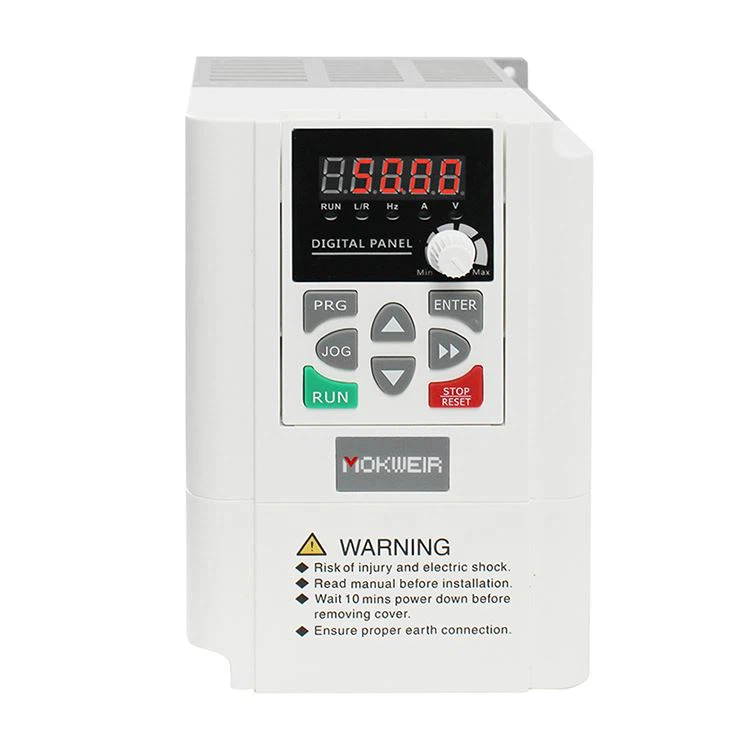

Contact for Purchase and洽谈
In conclusion, the significance of a high power factor in a 220v to 380v VFD cannot be overstated. It offers numerous technical, economic, and environmental benefits, making it an essential consideration for any industrial or commercial application that uses VFDs. As a leading supplier of 220v to 380v VFDs, we are committed to providing our customers with high-quality products that offer a high power factor and excellent performance. If you are interested in purchasing our 220v to 380v VFDs or have any questions about power factor or VFDs in general, please feel free to contact us. We look forward to discussing your specific requirements and providing you with the best solutions for your needs.
References
- Chapman, S. J. (2012). Electric Machinery Fundamentals. McGraw-Hill Education.
- Del Toro, V. (1997). Electric Machines and Power Systems. Prentice Hall.
- Fitzgerald, A. E., Kingsley, C., Jr., & Umans, S. D. (2003). Electric Machinery. McGraw-Hill Education.