

As a supplier of 380V Variable Frequency Drives (VFDs), I often encounter inquiries about various technical aspects of our products. One of the most common questions is about the acceleration and deceleration smoothness of a 380V VFD. In this blog post, I will delve into this topic, explaining what acceleration and deceleration smoothness mean, why they are important, and how our 380V VFDs excel in this regard.
Understanding Acceleration and Deceleration Smoothness
Acceleration and deceleration smoothness refer to how smoothly a VFD can increase or decrease the speed of an electric motor. When a VFD accelerates a motor, it gradually increases the frequency and voltage supplied to the motor, causing it to speed up. Similarly, during deceleration, the VFD reduces the frequency and voltage to slow down the motor. The key is to make these transitions as smooth as possible, without causing sudden jolts or jerks.
Smooth acceleration and deceleration are crucial for several reasons. First, they help to extend the lifespan of the motor and other connected equipment. Sudden changes in speed can put excessive stress on the motor's bearings, shafts, and other components, leading to premature wear and tear. By providing a smooth transition, the VFD reduces this stress and helps to prevent damage.
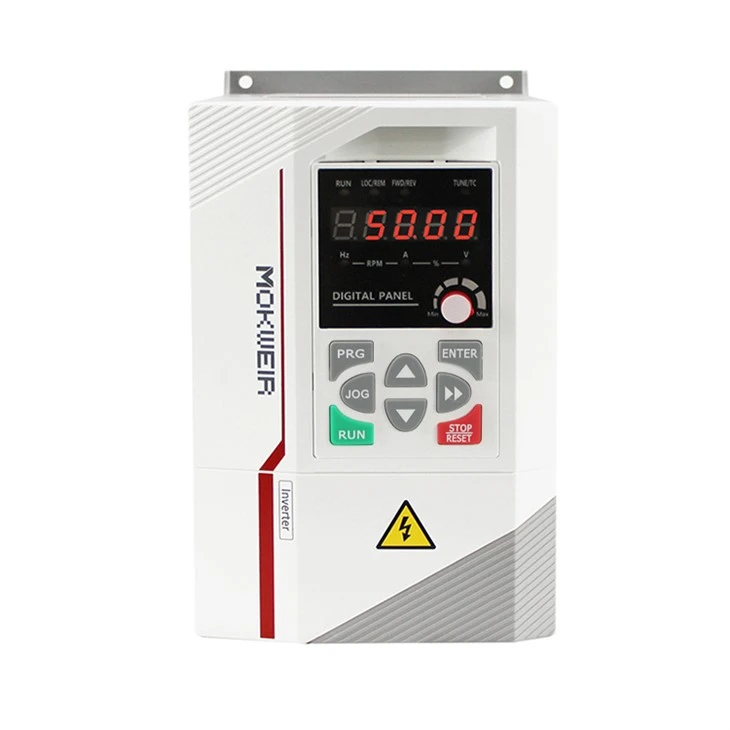

Second, smooth acceleration and deceleration improve the overall performance and efficiency of the system. When a motor starts or stops abruptly, it can cause fluctuations in the power supply and create electrical noise. This can affect the operation of other equipment connected to the same power grid and lead to inefficiencies. A VFD with good acceleration and deceleration smoothness minimizes these issues, ensuring a stable and efficient operation.
Finally, smooth acceleration and deceleration enhance the safety of the system. In applications where the motor is connected to moving machinery, sudden changes in speed can pose a risk to operators and bystanders. A smooth transition reduces the likelihood of accidents and provides a safer working environment.
How Our 380V VFDs Ensure Acceleration and Deceleration Smoothness
Our 380V VFDs are designed with advanced control algorithms and technologies to ensure excellent acceleration and deceleration smoothness. Here are some of the key features that contribute to this performance:
1. Precise Frequency and Voltage Control
Our VFDs use sophisticated control algorithms to precisely adjust the frequency and voltage supplied to the motor. This allows for a smooth and gradual increase or decrease in speed, without any sudden jumps. The control algorithms continuously monitor the motor's speed and adjust the output accordingly, ensuring a stable and consistent operation.
2. Soft Start and Soft Stop Functions
Our VFDs are equipped with soft start and soft stop functions, which gradually ramp up or down the speed of the motor over a user-defined period. This eliminates the sudden inrush of current that can occur when a motor starts directly, reducing stress on the motor and the power supply. The soft stop function also helps to prevent overshooting and ensures a smooth stop.
3. Torque Compensation
To further enhance the smoothness of acceleration and deceleration, our VFDs feature torque compensation technology. This technology adjusts the torque output of the motor based on the load conditions, ensuring that the motor has enough power to start and stop smoothly, even under heavy loads. By compensating for the load changes, the VFD maintains a constant speed and prevents the motor from stalling or jerking.
4. Adaptive Control
Our VFDs are capable of adaptive control, which means they can automatically adjust their performance based on the operating conditions. This includes factors such as the load type, the speed range, and the ambient temperature. By adapting to these conditions, the VFD can optimize the acceleration and deceleration process, ensuring a smooth and efficient operation.
Applications of 380V VFDs with Smooth Acceleration and Deceleration
The smooth acceleration and deceleration capabilities of our 380V VFDs make them suitable for a wide range of applications. Some of the common applications include:
1. Industrial Machinery
In industrial settings, our VFDs are used to control the speed of various types of machinery, such as conveyor belts, pumps, fans, and compressors. The smooth acceleration and deceleration help to reduce wear and tear on the equipment, improve energy efficiency, and enhance the overall productivity of the manufacturing process.
2. HVAC Systems
Heating, ventilation, and air conditioning (HVAC) systems require precise control of the motor speed to maintain a comfortable indoor environment. Our 380V VFDs are used in HVAC applications to control the speed of the fans and pumps, providing a smooth and efficient operation. The soft start and soft stop functions also help to reduce noise and vibration, improving the comfort of the occupants.
3. Elevators and Escalators
Elevators and escalators require smooth and reliable operation to ensure the safety and comfort of the passengers. Our VFDs are used in these applications to control the speed of the motors, providing a smooth acceleration and deceleration. The precise control of the motor speed also helps to reduce energy consumption and extend the lifespan of the equipment.
4. Renewable Energy Systems
In renewable energy systems, such as wind turbines and solar power plants, our VFDs are used to control the speed of the generators. The smooth acceleration and deceleration help to optimize the power output of the generators, improve the efficiency of the energy conversion process, and reduce the stress on the equipment.
Conclusion
In conclusion, the acceleration and deceleration smoothness of a 380V VFD is a critical factor in ensuring the performance, efficiency, and safety of the system. Our 380V VFDs are designed with advanced control algorithms and technologies to provide excellent acceleration and deceleration smoothness, making them suitable for a wide range of applications.
If you are looking for a high-quality 380V VFD with smooth acceleration and deceleration capabilities, we invite you to explore our product range. We offer a variety of 3 Phase Variable Frequency Drive, 5hp VFD Single Phase Input, and Frequency Converter 50hz To 60hz 3 Phase options to meet your specific needs. Contact us today to start a discussion about your requirements and explore how our VFDs can benefit your application.
References
- Miller, T. J. E. (2001). Brushless Permanent-Magnet and Reluctance Motor Drives. Oxford University Press.
- Boldea, I., & Nasar, S. A. (1999). Electric Drives: An Integrated Approach. CRC Press.
- Krause, P. C., Wasynczuk, O., & Sudhoff, S. D. (2013). Analysis of Electric Machinery and Drive Systems. Wiley-IEEE Press.