

As a supplier of 220v To 380v VFDs, I often get asked about the certifications that these Variable Frequency Drives (VFDs) should have. In this blog post, I'll delve into the essential certifications that a 220v To 380v VFD should possess to ensure safety, quality, and compliance with international standards.
Understanding 220v To 380v VFDs
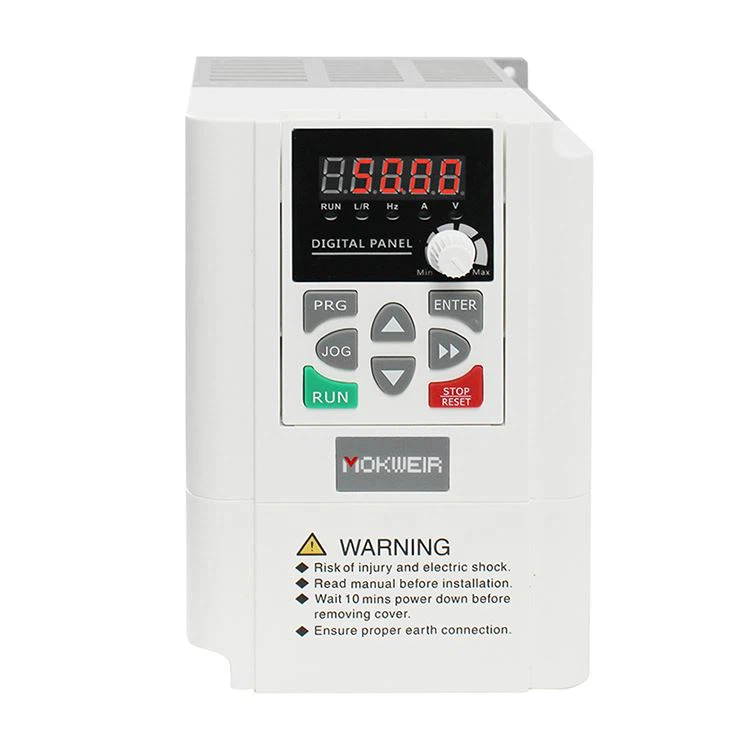
Before we discuss the certifications, let's briefly understand what a 220v To 380v VFD is. A 220v To 380v VFD is a specialized device that converts a single-phase 220V power supply into a three-phase 380V power supply. This conversion is crucial in many industrial and commercial applications where three-phase power is required, but only single-phase power is available. There are different types of 220v To 380v VFDs, such as Single Phase Output VFD and Single Phase Input 3 Phase Output VFD, each with its own unique features and applications.
CE Certification
One of the most important certifications for a 220v To 380v VFD is the CE certification. The CE mark indicates that the product complies with the essential health and safety requirements set out in European Union (EU) legislation. It is a mandatory certification for products sold in the EU market. For a 220v To 380v VFD, the CE certification ensures that the device meets the electromagnetic compatibility (EMC) requirements, which means it will not cause interference to other electronic devices and can operate properly in an environment with other electrical equipment. It also ensures that the VFD meets the safety requirements, such as protection against electric shock, overheating, and mechanical hazards.
UL Certification
UL (Underwriters Laboratories) certification is another significant certification for 220v To 380v VFDs, especially for products sold in the North American market. UL is an independent safety science company that tests and certifies products to ensure they meet specific safety standards. A UL-certified 220v To 380v VFD has been tested for electrical safety, including protection against electric shock, short circuits, and overcurrent. It also undergoes tests for mechanical safety, such as protection against physical damage and proper enclosure design. Having a UL certification gives customers confidence in the safety and reliability of the VFD.
FCC Certification
The Federal Communications Commission (FCC) certification is essential for 220v To 380v VFDs, as it ensures that the device complies with the electromagnetic interference (EMI) regulations in the United States. VFDs can generate electromagnetic interference, which can affect the performance of other electronic devices. The FCC certification ensures that the VFD meets the limits for radiated and conducted emissions, reducing the risk of interference to other equipment. This is particularly important in industrial and commercial settings where there are many electronic devices operating in close proximity.
RoHS Certification
RoHS (Restriction of Hazardous Substances) certification is related to environmental protection. The RoHS directive restricts the use of certain hazardous substances in electrical and electronic equipment. A RoHS-certified 220v To 380v VFD ensures that the device does not contain substances such as lead, mercury, cadmium, hexavalent chromium, polybrominated biphenyls (PBBs), and polybrominated diphenyl ethers (PBDEs) above the specified limits. This certification is important for companies that are committed to environmental sustainability and for compliance with regulations in many countries around the world.
ISO Certification
ISO (International Organization for Standardization) certifications, such as ISO 9001 for quality management systems and ISO 14001 for environmental management systems, are also important for 220v To 380v VFD suppliers. An ISO 9001-certified company has a well-defined quality management system in place, which ensures that the VFDs are manufactured with consistent quality. This includes processes for design, production, testing, and customer service. ISO 14001 certification indicates that the company is committed to minimizing its environmental impact during the manufacturing process. It covers aspects such as energy efficiency, waste management, and pollution prevention.
Importance of Certifications
Certifications are not just pieces of paper; they are crucial for several reasons. Firstly, they ensure the safety of the end-users. A certified 220v To 380v VFD has been tested and verified to meet strict safety standards, reducing the risk of electrical accidents and fires. Secondly, certifications enhance the reliability of the product. VFDs that meet international standards are more likely to perform consistently and have a longer lifespan. Thirdly, certifications are often required by customers, especially in regulated industries. Having the necessary certifications can open up new markets and increase the competitiveness of the product.
How to Choose a Certified 220v To 380v VFD
When choosing a 220v To 380v VFD, it is important to look for products that have the relevant certifications. You can ask the supplier for copies of the certification documents to verify their authenticity. It is also a good idea to choose a supplier with a good reputation and a track record of providing high-quality products. Additionally, consider the specific requirements of your application, such as the power rating, frequency range, and control features.

Conclusion
In conclusion, a 220v To 380v VFD should have several important certifications, including CE, UL, FCC, RoHS, and ISO certifications. These certifications ensure the safety, quality, and environmental friendliness of the product. As a supplier of 220v To 380v VFDs, we are committed to providing products that meet the highest standards and have all the necessary certifications. If you are in the market for a 220v To 380v VFD, we invite you to contact us for more information and to discuss your specific requirements. We look forward to the opportunity to work with you and provide you with the best solution for your power conversion needs.
References
- European Union legislation on CE certification
- UL standards for electrical safety
- FCC regulations on electromagnetic interference
- RoHS directive on hazardous substances
- ISO standards for quality and environmental management systems