

Regenerative braking is a crucial feature in modern Variable Frequency Drives (VFDs), especially in Single Phase Output VFDs. As a provider of high - quality Single Phase Output VFD, I am excited to delve into how regenerative braking functions in these innovative devices.
The Basics of Single Phase Output VFDs
Before we explore regenerative braking, let's briefly understand what a Single Phase Output VFD is. A Single Phase Output VFD is designed to convert a single - phase input power supply into a variable - frequency single - phase output. This is extremely useful in applications where single - phase power is readily available, but the load requires variable speed operation. For instance, in small - scale industrial machinery, home appliances, and some specialized equipment, Single Phase Output VFDs offer a cost - effective and efficient solution.
Single Phase Output VFDs can also be related to Single Phase Input 3 Phase Output VFD and 220v To 380v VFD in the sense that they all belong to the family of frequency converters. They share some common principles of power conversion and control, but with different output requirements to meet diverse industrial needs.
What is Regenerative Braking?
Regenerative braking is a process in which the kinetic energy of a moving load is converted back into electrical energy and then fed back into the power supply system or dissipated in a controlled manner. In the context of a Single Phase Output VFD, when the motor connected to the VFD needs to decelerate or stop, instead of simply using mechanical brakes to dissipate the kinetic energy as heat, the VFD can use the motor as a generator. This not only saves energy but also reduces wear and tear on mechanical braking components.
How Regenerative Braking Works in a Single Phase Output VFD
1. Motor as a Generator
When the load connected to the Single Phase Output VFD starts to slow down, the motor enters the generator mode. In normal operation, the VFD supplies electrical power to the motor, which then converts it into mechanical energy to drive the load. However, during deceleration, the kinetic energy of the load causes the motor to rotate faster than the speed determined by the VFD's output frequency. At this point, the motor acts as a generator.
The motor, which has rotating magnetic fields, now generates an electromotive force (EMF) as the rotor moves through these magnetic fields. This generated EMF produces a current that flows in the opposite direction compared to the normal motor - operating current. The magnitude of this generated current depends on factors such as the speed of deceleration, the inertia of the load, and the characteristics of the motor itself.
2. Energy Conversion in the VFD
Once the motor starts generating electrical energy, the Single Phase Output VFD needs to handle this energy. Inside the VFD, there is a rectifier section that normally converts the input single - phase AC power into DC power. During regenerative braking, the generated electrical energy from the motor is in the form of AC. This AC energy is first rectified into DC by the same rectifier circuit in the VFD.
The DC voltage on the DC bus of the VFD then starts to increase due to the additional energy from the motor. To prevent over - voltage on the DC bus, which could damage the VFD components, the VFD must have a way to manage this excess energy.
3. Energy Disposal Options
There are two main ways to deal with the regenerated energy in a Single Phase Output VFD:
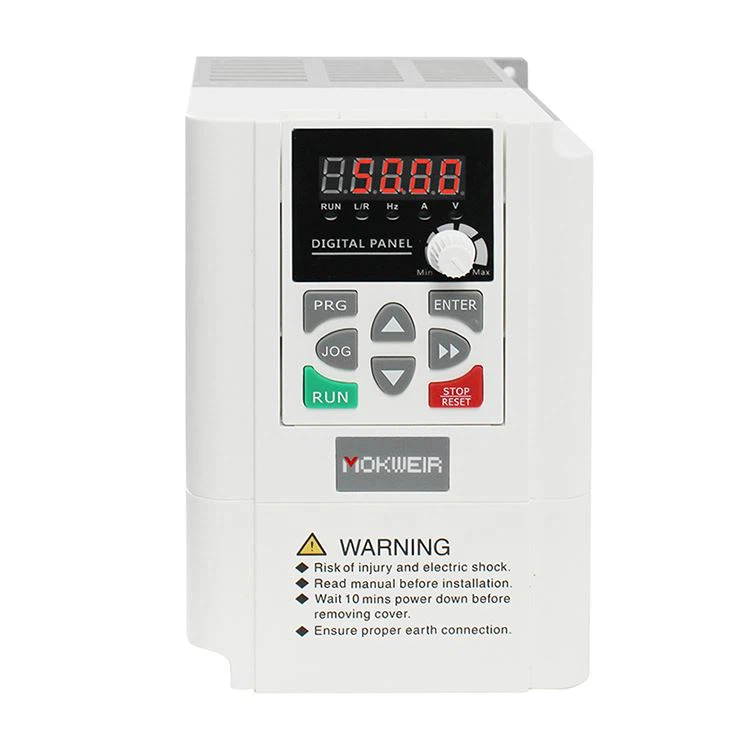

Inverter - based Regenerative Systems
In some advanced Single Phase Output VFDs, an inverter - based regenerative system is used. This system can convert the DC energy on the DC bus back into single - phase AC with the correct frequency and phase. This regenerated AC power can then be fed back into the single - phase power supply grid.
To achieve this, the VFD uses a bidirectional inverter circuit. The controller in the VFD continuously monitors the voltage and frequency of the power supply grid and adjusts the output of the bidirectional inverter to match these parameters. This way, the regenerated energy can be effectively returned to the grid, reducing the overall energy consumption of the system.
Dynamic Braking Resistors
Another common method is to use dynamic braking resistors. When the DC bus voltage in the VFD rises above a certain threshold during regenerative braking, a braking transistor in the VFD is turned on. This connects the DC bus to a braking resistor. The excess electrical energy is then dissipated as heat in the braking resistor.
The value of the braking resistor is carefully selected based on the power rating of the VFD and the expected amount of regenerated energy. A larger resistor can handle more power but may dissipate the energy more slowly, while a smaller resistor can dissipate energy quickly but may overheat if the regenerative power is too high.
Advantages of Regenerative Braking in Single Phase Output VFDs
1. Energy Savings
One of the most significant advantages of regenerative braking is energy savings. By converting the kinetic energy of the load back into electrical energy and either feeding it back to the grid or using it within the system, the overall energy consumption of the application is reduced. This is especially important in applications where frequent starting and stopping of the motor occur, such as conveyor systems or elevator drives.
2. Extended Equipment Life
Regenerative braking reduces the reliance on mechanical brakes. Mechanical brakes are subject to wear and tear over time, and their performance may degrade. By using the motor as a brake during deceleration, the wear on mechanical braking components is minimized, leading to longer equipment life and reduced maintenance costs.
3. Improved System Performance
The ability to precisely control the deceleration of the motor through regenerative braking enhances the overall performance of the system. It allows for smoother stops and starts, reducing mechanical stress on the load and the motor itself. This can improve the accuracy of positioning in applications such as machining centers or robotic arms.
Applications of Regenerative Braking in Single Phase Output VFDs
1. Small - scale Industrial Machinery
In small - scale industrial settings, where single - phase power is prevalent, Single Phase Output VFDs with regenerative braking can be used in various types of machinery. For example, in small conveyor belts used in warehouses or light manufacturing, the regenerative braking feature can save energy during the frequent starting and stopping of the belt.
2. Home Appliances
Some high - end home appliances, such as washing machines or vacuum cleaners, can benefit from Single Phase Output VFDs with regenerative braking. In a washing machine, the motor needs to change speed frequently during the washing and spinning cycles. Regenerative braking can recover some of the energy during the deceleration of the drum, reducing the overall energy consumption of the appliance.
Contact for Purchase and Consultation
If you are interested in Single Phase Output VFDs with regenerative braking or other related products like Single Phase Input 3 Phase Output VFD and 220v To 380v VFD, we are here to assist you. Our team of experts can provide detailed technical support and help you choose the right product for your specific application. Whether you need to improve energy efficiency, extend equipment life, or enhance system performance, our Single Phase Output VFDs are the ideal solution. Reach out to start a discussion about your requirements and explore the possibilities of integrating our products into your projects.
References
- Bose, B. K. (2002). Modern Power Electronics and AC Drives. Prentice Hall.
- Mohan, N., Undeland, T. M., & Robbins, W. P. (2012). Power Electronics: Converters, Applications, and Design. John Wiley & Sons.